


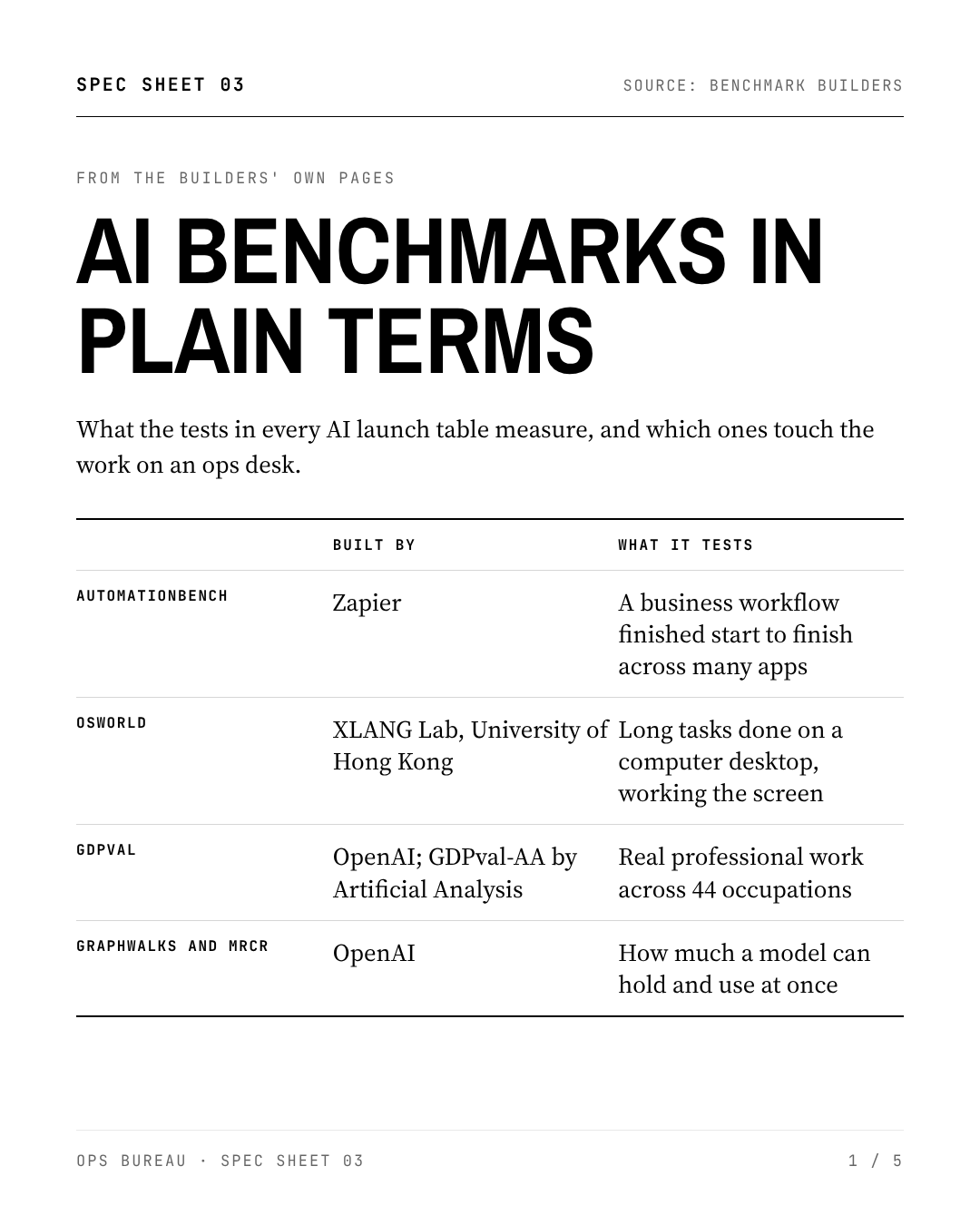
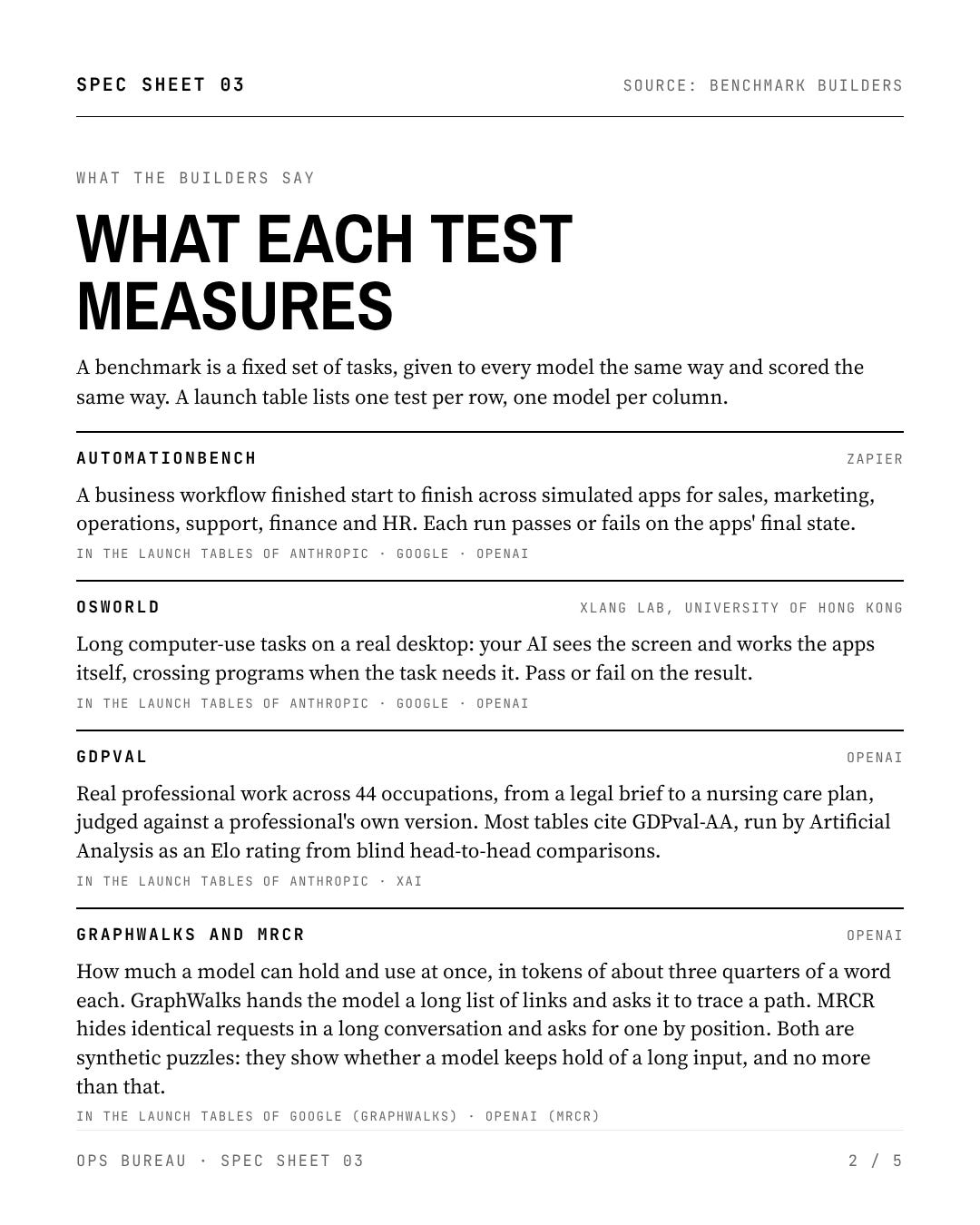
An AI model launch comes with a table of test scores: AutomationBench, OSWorld, GDPval. Spec Sheet 03 explains what those tests measure and which ones touch the work on an operations desk. The descriptions, the desk jobs and the human lock are ours, and the header on each page says which voice you're reading.
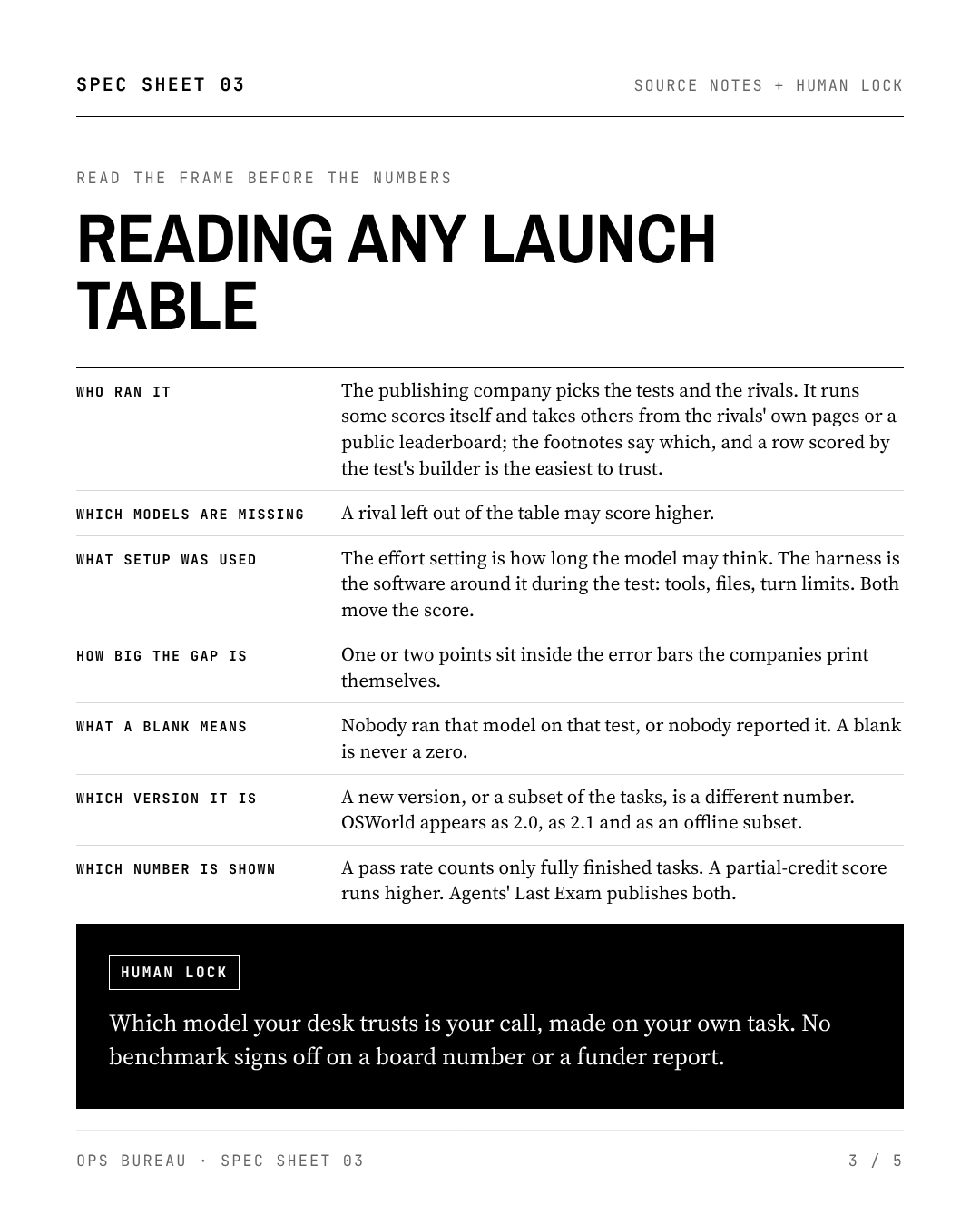
The rule to keep is on page 3: read the frame before the numbers. Who ran the test, which models are missing, what setup was used, how big the gap is, what a blank means, which version it is, and which number is shown. Under it sits the human lock: which model your desk trusts is your call, made on your own task.
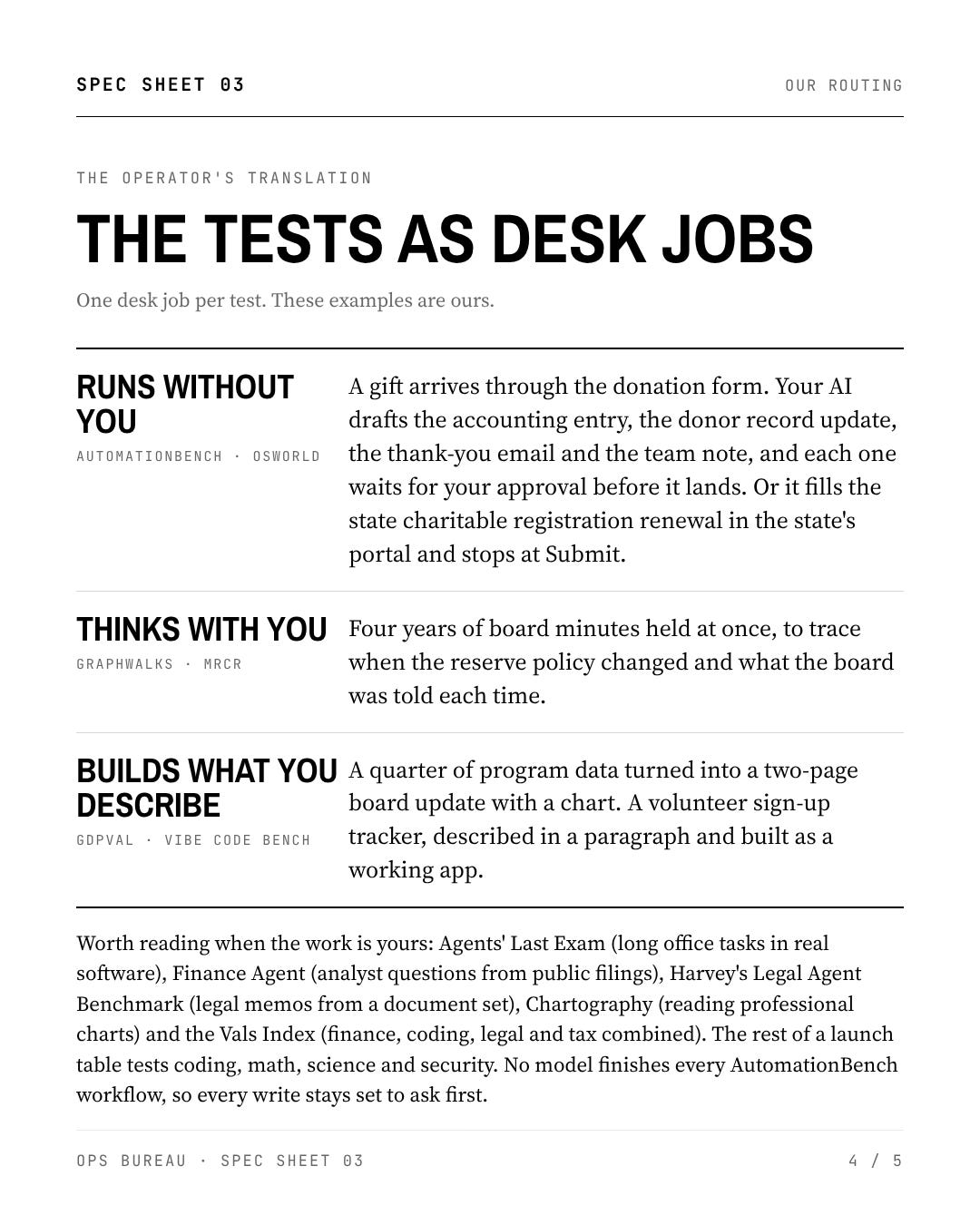
Page 4 is the routing. The gift-to-thank-you workflow across your apps runs without you, with every write set to ask first. Four years of board minutes, held at once to trace a policy change, thinks with you. A board update from a quarter of program data, or a sign-up tracker from a paragraph, is built from what you describe.
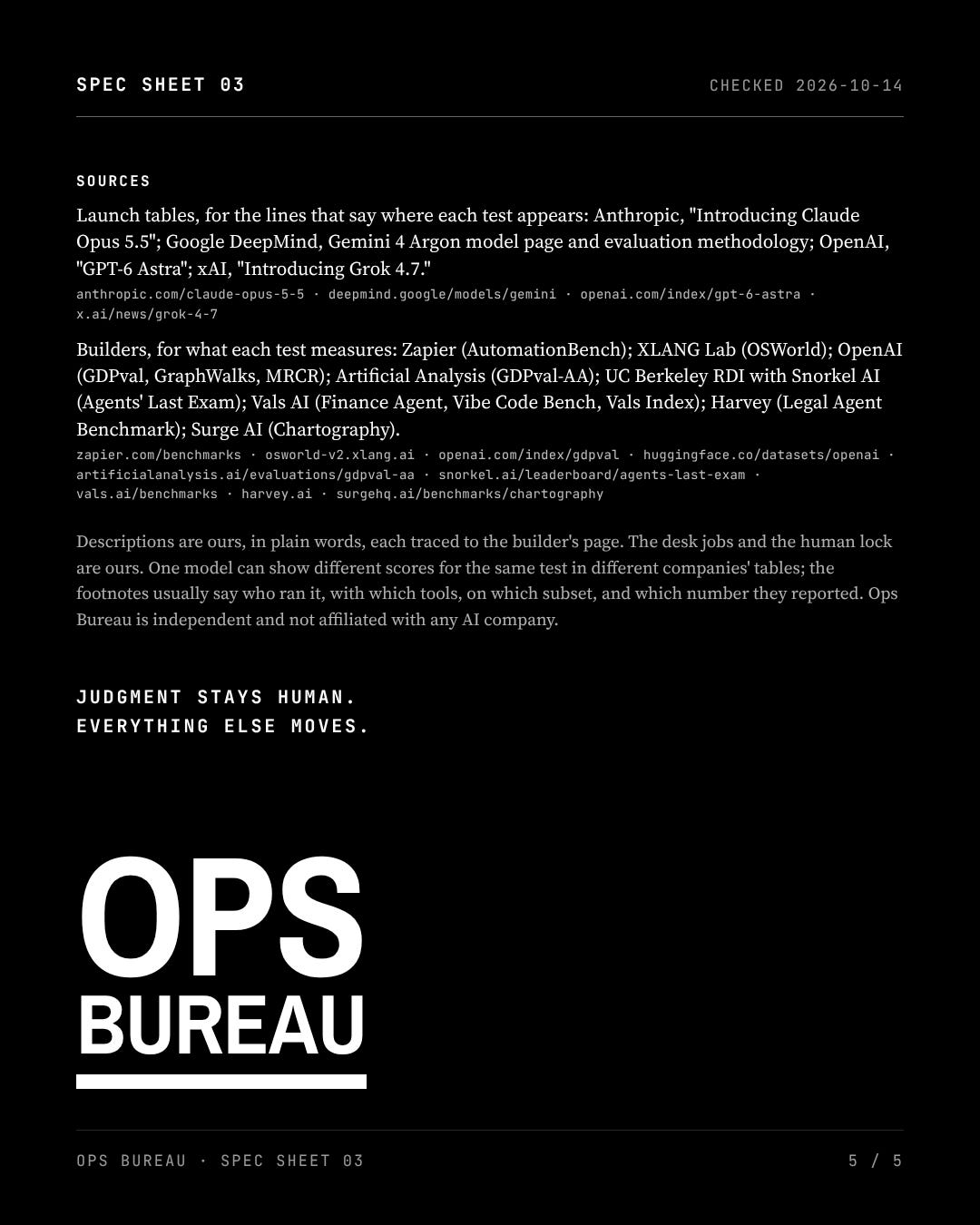
Sources, all checked Oct 14, 2026. Launch tables, for the lines that say where each test appears: Anthropic, Introducing Claude Opus 5.5; Google DeepMind, Gemini 4 Argon model page and evaluation methodology; OpenAI, GPT-6 Astra; xAI, Introducing Grok 4.7. Builders, for what each test measures: Zapier, AutomationBench; XLANG Lab, OSWorld 2.0; OpenAI, GDPval, GraphWalks and MRCR; Artificial Analysis, GDPval-AA; UC Berkeley RDI with Snorkel AI, Agents’ Last Exam; Vals AI, Finance Agent, Vibe Code Bench and Vals Index; Harvey, Legal Agent Benchmark; Surge AI, Chartography. The token rule of thumb is OpenAI’s: Understanding and counting tokens.